Table of Contents
- Key Considerations for Choosing an Inpatient Drug Rehab Center in Oklahoma
- Evaluating Accreditation and Licensing Standards
- Assessing Treatment Programs and Specialized Therapies
- Reviewing Levels of Care and Continuing Support
- Red Flags to Watch for When Choosing an Inpatient Rehab Center
- Questions to Ask Potential Inpatient Rehab Programs
Key Considerations for Choosing an Inpatient Drug Rehab Center in Oklahoma
An inpatient drug rehab center in Oklahoma must meet rigorous standards of safety and care to provide a foundation for lasting recovery. When comparing Oklahoma drug rehab centers, accreditation, continuity of care, specialized tracks, and therapy options are the most important criteria to examine. Joint Commission accreditation signals a facility’s commitment to safety and quality, which is why our Oklahoma City center maintains this credential. A full continuum of care is essential for inpatient rehab in Oklahoma, because it supports individuals from medical detox through residential, partial hospitalization, intensive outpatient, and sober living without gaps. Specialized programming for veterans, Native Americans, and gender-specific groups tailors care to unique experiences and healing journeys, drawing on culturally informed approaches. In our residential and outpatient settings, we integrate evidence-based methods like CBT, DBT, and EMDR with experiential therapies such as equine, adventure, and music therapy to ensure each treatment plan is personalized. A facility that offers 24/7 admissions support and free insurance verification removes barriers to entry and helps families access care quickly.
Because we care, accreditation and licensing form the foundation of safety and trust, making them the first consideration in evaluating any inpatient drug rehab Oklahoma programs.
Key Takeaways
- Accreditation is an independent review to determine if treatment facilities meet specific standards of care and safety.
- When evaluating inpatient drug rehab Oklahoma programs, beyond accreditation, the substance of a program lies in its therapeutic offerings and individualized care.
- Effective addiction treatment progresses through a structured continuum of care, with each level offering the right intensity of support at the right time.
- Treatment centers that are not currently accredited by a national organization such as the Joint Commission or CARF warrant caution.
- We suggest asking the following questions to assess the quality and your fit with a program during phone screenings and facility tours.
Evaluating Accreditation and Licensing Standards
Accreditation is an independent review to determine if treatment facilities meet specific standards of care and safety. Licensing, on the other hand, is mandatory state-level compliance that ensures a center operates legally. Both are important to ensure accountability of inpatient drug rehab facilities. At Royal Life Centers, we have accreditation from The Joint Commission and NAATP, and LegitScript certification. We also have facility licenses in compliance with state behavioral health agencies in all of our service areas, including Oklahoma.
One important thing to look for when selecting an inpatient drug rehab center in Oklahoma is accreditation. You can find out a center’s credentials by going to the accrediting agency’s website or by checking on licensing during the admission process. Protection of patients and staff as well as the ratio of staff to patients and the practice of clinical services are important things evaluated by the agencies. We also think it’s important that families verify the accreditation of the inpatient drug rehab centers they are considering, as accreditation is a good objective measure of quality.
Accreditation and licensing are first steps in evaluating a program; however, it is important to look at the therapies and the continuum of care offered.
Assessing Treatment Programs and Specialized Therapies
When evaluating inpatient drug rehab Oklahoma programs, beyond accreditation, the substance of a program lies in its therapeutic offerings and individualized care. An effective center should provide a variety of evidence-based modalities—such as cognitive behavioral therapy (CBT), dialectical behavior therapy (DBT), eye movement desensitization and reprocessing (EMDR), equine therapy, music therapy, and adventure activity therapy—to address diverse substance use and mental health needs. Specialized treatment tracks for Native American individuals, veterans, men’s, and women’s programs further indicate a facility’s dedication to culturally sensitive, targeted care. Equally important is a commitment to evidence-based practices and the creation of individualized treatment plans that adapt to each guest’s history and goals. Medication-assisted treatment (MAT) with Suboxone reflects a comprehensive, integrated approach. At Royal Life Centers, we offer many of these therapies and specialized tracks, including our Native American and veterans programs, and we develop personalized care plans to meet guests where they are in their recovery journey. Once you have examined the program’s therapy options, the next consideration is the level of care that best matches an individual’s circumstances and the continuing support provided after treatment.
Reviewing Levels of Care and Continuing Support
Effective addiction treatment progresses through a structured continuum of care, with each level offering the right intensity of support at the right time. Our inpatient rehab in Oklahoma is part of the same network, so we can provide seamless transitions to higher or lower levels of care. Our normative continuum of care includes medical detox, residential inpatient, partial hospitalization, intensive outpatient, outpatient and sober living. Our treatment plans are individualized based on the latest research. This gives us the flexibility to adjust treatment length based on guests’ needs.
We are Joint Commission-accredited and LegitScript-certified, so every service meets rigorous quality standards. Continuing support extends beyond the structured programs: aftercare planning and alumni services provide ongoing connection and accountability, helping guests build a sober network and manage triggers after discharge. Our 24/7 admissions team is available to assess needs and guide guests toward the appropriate level of care.
But understanding the levels is only the first step, the facility you choose must also meet essential quality benchmarks.
Red Flags to Watch for When Choosing an Inpatient Rehab Center
Treatment centers that are not currently accredited by a national organization such as the Joint Commission or CARF warrant caution.
Common Warning Signs
- Generic treatment programs that don’t adapt to each guest’s clinical needs
- Any “limited time” push that skips contract or payment review
- Unclear aftercare planning that leaves discharge unsupported
We recommend you verify accreditation yourself and check the clinical staff’s licensure. When considering inpatient drug rehab Oklahoma options, pay attention to see if the center is welcoming to your questions.
After identifying the previously mentioned red flags, ask specific questions to determine if the program is right for you.
Questions to Ask Potential Inpatient Rehab Programs
We suggest asking the following questions to assess the quality and your fit with a program during phone screenings and facility tours.
- What accreditations and state licenses does the facility hold? Look for recognized bodies like the Joint Commission and valid state behavioral health licenses to ensure the program meets rigorous standards. Humanistic care requires oversight.
- What therapy modalities and specialized tracks do you offer? Ask about dual diagnosis, gender-specific, or veteran-specific programs to see if the program can address your unique needs.
- How can I verify an inpatient drug rehab in Oklahoma for valid state credentials? Request specific license numbers and check them against state regulatory databases to confirm the facility operates legally and meets safety requirements in inpatient drug rehab in Oklahoma.
- Which insurance plans do you accept for treatment in Oklahoma? Understanding coverage options early helps you plan financially.
Once you’ve determined the costs and payment options, you can decide which work for you.
Cost Expectations and Payment Options for Inpatient Rehab
The total cost of inpatient rehab in Oklahoma depends on many factors, including the length of the program, the level of medical supervision, the therapies offered, and the presence of detox, co-occurring mental health issues, and other considerations. Treatment plans are developed based on the clinical needs of each guest. For this reason, most treatment plans are priced individually.
Many Oklahoma drug rehab centers accept insurance, and we verify your benefits at no charge to clarify coverage before admission. Financing options are available to help bridge gaps, and our admissions team provides personalized cost estimates and support around the clock.
Oklahoma-Specific Considerations for Inpatient Rehab
Understanding costs and payment terms helps you consider other considerations for your inpatient rehab needs in Oklahoma. Accreditation is a mark of quality. Our Oklahoma City location has Joint Commission accreditation and LegitScript certification, which means that the program meets the national benchmarks of quality and care. Before committing to a program, be sure to confirm the Oklahoma drug rehab centers’ Joint Commission accreditation and LegitScript certification and license to operate in the state of Oklahoma.
We also offer a Native American specialty program that integrates traditional healing philosophies with evidence-based therapies, as well as a dedicated veterans’ track. These are especially helpful in Oklahoma where many people seek treatment that is aligned to their cultural and spiritual beliefs.
Our Oklahoma City location provides 24/7 support. Our team can coordinate transportation and immediate assessments so you can begin treatment without delays. The factors above will help you identify potential facilities. Our checklist will help you make your decision.
Your Inpatient Rehab Selection Checklist
When evaluating inpatient drug rehab oklahoma.
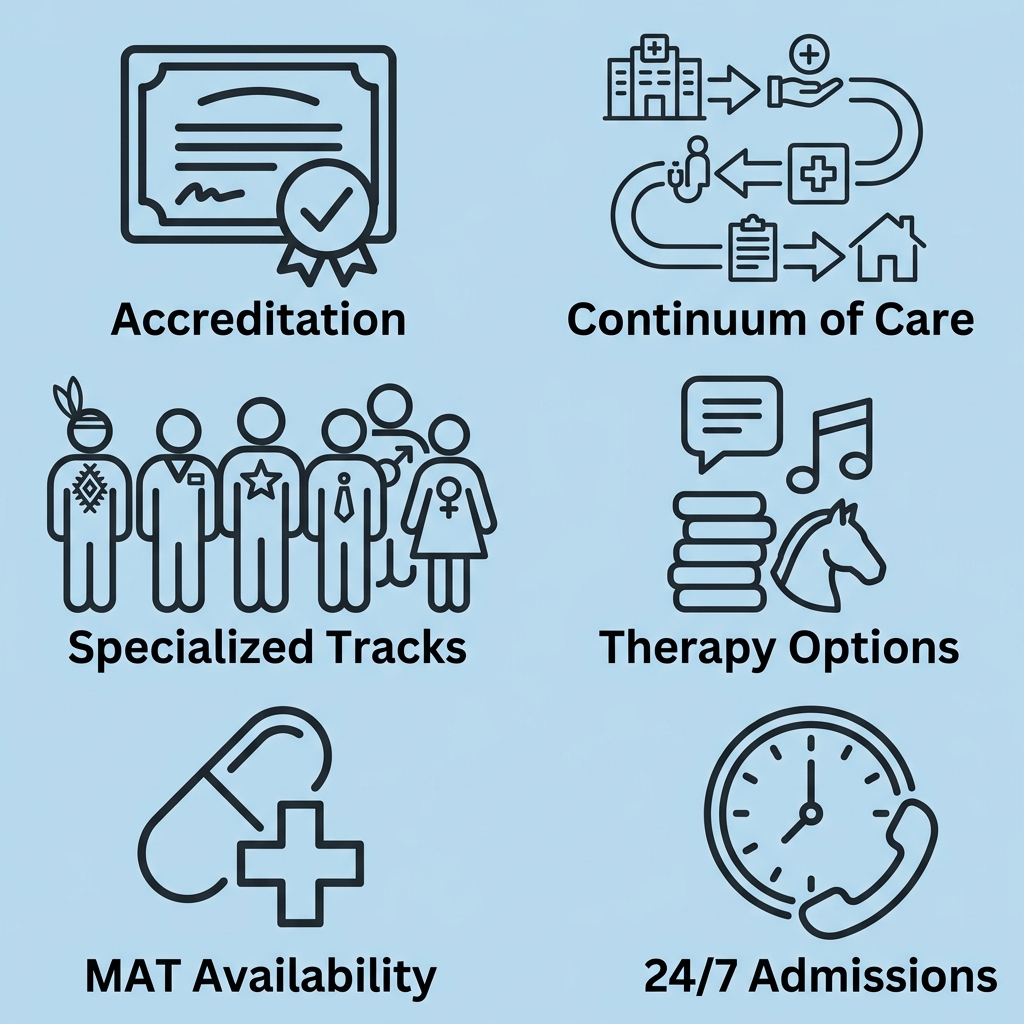
- Confirm Joint Commission accreditation and state licensure.
- Verify continuum: detox, residential, PHP, IOP, OP, sober living.
- Ask about specialty tracks for veterans and Native American.
- Ask about MAT (Suboxone) and therapies like CBT and DBT.
- 24/7 admissions and insurance verification.
Frequently Asked Questions About Inpatient Drug Rehab in Oklahoma
What can I expect from inpatient drug rehab in Oklahoma?
If you are searching for inpatient drug rehab in Oklahoma, you may have questions. Our inpatient program provides 24-hour clinical support and specialized, medically supervised schedules.
What therapies are offered in Oklahoma’s inpatient programs?
We provide CBT, DBT and EMDR, as well as equine, music, and adventure therapy through Sober Studios.
How does the admissions process work?
Begin with a free, confidential assessment by calling admissions 24/7 at (877) 732-6837. We verify benefits, coordinate arrival, and assist with intake at our Oklahoma City facility.
Are there specialized tracks in our Oklahoma program that specialize in serving veterans or Native American guests?
We provide culturally informed tracks for veterans and Native American guests, with identity-affirming group work. If you are ready to take the next step, we are here for you 24/7.
Take the Next Step Toward Recovery in Oklahoma
If you’re ready to move forward, contact our team at 877-732-6837 to begin inpatient drug rehab in Oklahoma; we provide personalized, research-based care at our Oklahoma City center with 24/7 admissions and Joint Commission accreditation. Results may vary; this information is for educational purposes and is not a substitute for professional medical advice.